


How many performance mares are there?
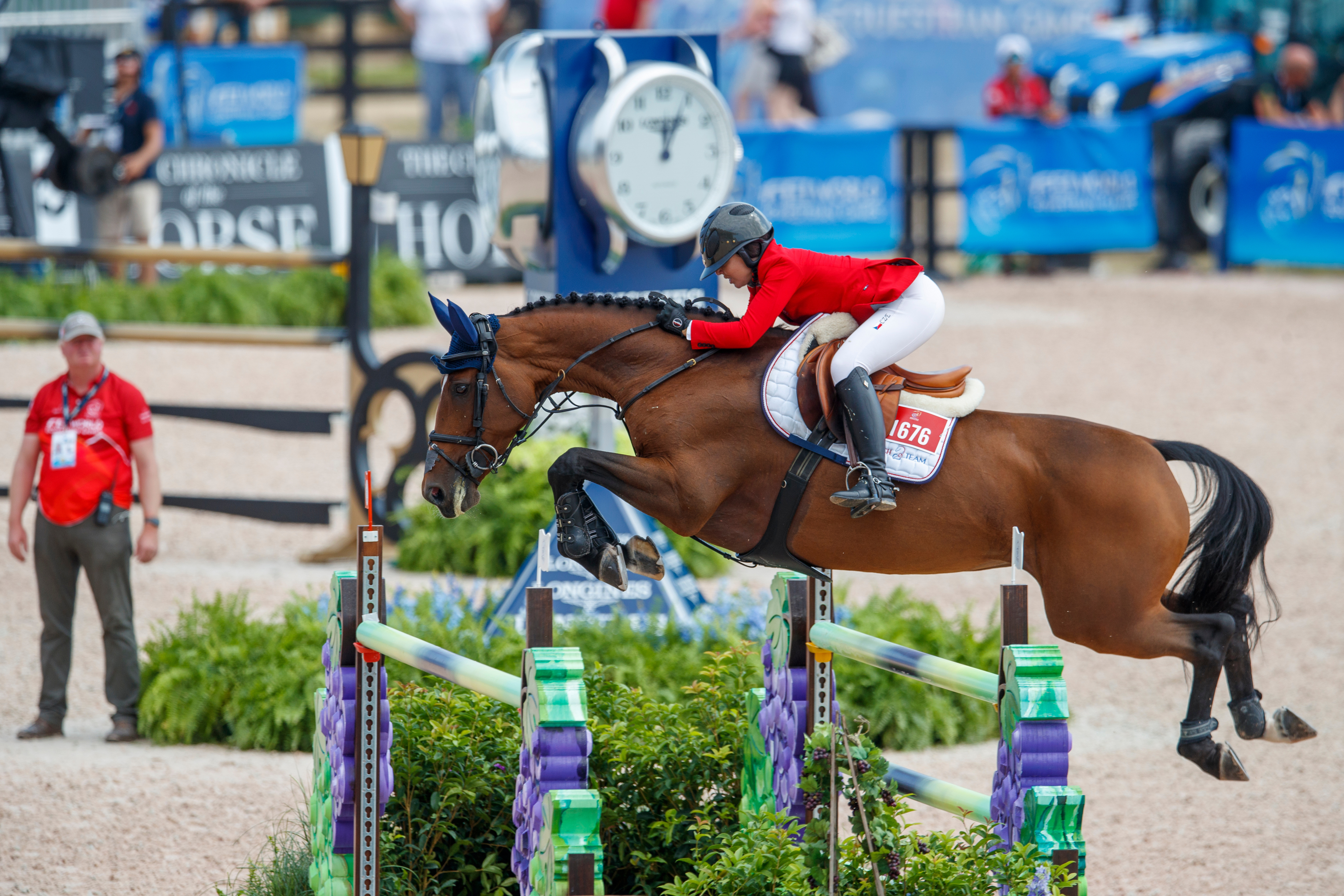
Sport and breeding are increasingly going hand in hand. In this context, the performance predicate, or prestatie predicate in Dutch, has become highly valuable for a broodmare, as it indicates her ability to pass on athletic qualities to her offspring. To date, only a select group of just over 8,000 mares has ever been awarded this predicate, making it a true hallmark of quality within breeding.
The KWPN has a unique predicate system. No other studbook in the world distinguishes mares’ qualities in this way, providing breeders with a wealth of information. Most predicates are awarded based on a mare’s own qualities or her individual sport results. However, the prestatie predicate and preferent status are exceptions. To receive the prestatie predicate, a mare must earn five points based on the achievements of two or three of her offspring (see box). She earns three points for an offspring competing in Grand Prix dressage, at a minimum 1.50m level in show jumping or achieving a 4- or 5*-placement in eventing. Offspring with lower-level results earn the mare one or two points, provided they compete at least at Z1 dressage, 1.30m jumping, or M level eventing. Other disciplines such as driving and endurance are also considered, as well as notable results at the World Championships for five-year-old dressage horses. Additionally, a horse can earn points through KWPN aptitude tests such as the IBOP, EPTM, and the performance tests. Since offspring often only reach the top levels when the mare is older, or even after she has passed away, the prestatie predicate can also be awarded posthumously.
Breeding directions
Most mares only receive the prestatie predicate later in life. Consequently, 83% of prestatie mares are registered in the riding horse breeding direction. In 2006, the specialization system was introduced, dividing this breeding direction into dressage and jumping horses. For horses born from 2006 onwards, one of the two breeding directions was chosen. This also applies to mares born earlier but only presented at the inspection from 2006 onwards, at which time a breeding direction was assigned. This concerns 17% of the prestatie mares. Of these, 1,012 are jumping horses, while 405 prestatie mares are registered in the dressage breeding direction. This can partly be explained by the fact that around the turn of the century more jumping foals were bred than dressage foals. Furthermore, international results in show jumping are easier to compare with Dutch standards than those in dressage. There are more FEI competitions in jumping, and results processing is more precise than for many national competitions abroad. Additionally, jumping horses tend to compete more frequently and at a younger age. On average, dressage mares receive their prestatie predicate later than jumping mares. When comparing prestatie mares born around the turn of the century, however, the differences between the two breeding directions are smaller.
At least 60% with ster predicate
You can’t get apples from a pear tree, and the same goes for prestatie mares. A large proportion of these mares not only carry the prestatie predicate but also possess other predicates. Previous research has shown that mares with a conformation predicate perform better in sport and breeding than mares without a positive conformation evaluation. Ninety percent of the prestatie mares are at least recorded in the studbook. A total of 2,466 mares are recorded in the studbook but have not been upgraded to ster or higher. Despite this, breeders have shown confidence in these mares and given them the opportunity to prove themselves in breeding. This concerns 30% of the prestatie mares. A further 632 prestatie mares have never been presented at an inspection and are therefore only registered in the foal book. Of these, 97 mares do hold the sport predicate. Their good prestatie in sport may have been a reason to use them for breeding. Twenty-nine percent of the prestatie mares carry the ster predicate, 19% are keur, and 11% are even elite. In total, nearly 60% of the mares performed well at inspection before entering breeding. Many prestatie mares pass on not only their sport genes; their offspring also perform well at inspections. As a result, over 19% of the prestatie mares have also been awarded the preferent predicate.
How does a mare earn the prestatie predicate?
A mare can earn the prestatie predicate if her offspring performs well in sport or demonstrate their talent in a suitability test (such as the KWPN performance test, IBOP, or EPTM). In total, a mare must achieve at least five points with a maximum of three offspring. This table applies only to jumping and dressage mares; different requirements apply to harness and Gelder horse mares.
Sporting genes
Sport is playing an increasingly important role in breeding, and modern reproductive techniques make it possible to use a mare for both sport and breeding purposes. The oldest horses included in these data come from the 1960s. In the previous century, these techniques did not exist, and sport was very different from today. Achieving Z-level was reserved for a select group of riders, and less value was placed on the sporting achievements of a broodmare. For this reason, it is remarkable that over 16% of prestatie mares carry the sport predicate. These mares have performed well in sport themselves and pass this on to their offspring. Just over 5% of prestatie mares successfully completed the IBOP or EPTM, which is significantly fewer than the total number of sport mares. Of the prestatie mares with a sport predicate, 62% achieved this in show jumping, 39% in dressage, and six mares in eventing. Most of these mares competed at the basic sport level and produced offspring who are also successful in the same discipline. A select group of prestatie mares has excelled in sport. Twenty-six dressage mares competed at Light Tour or higher, nine of which even reached Big Tour. Thirty-three prestatie mares competed at 1.50m or higher in show jumping. In addition, 35 mares were classified as international Grand Prix, a designation used until the year 2000.
From sport comes sport
The oldest dressage mare who competed at Grand Prix level and successfully passed on her qualities is Serlanda, a daughter of Glarus born in 1976. A more recent example of a prestatie mare with international Grand Prix success is Oogappel, a daughter of T.C.N. Partout. Another prime example of “from sport comes sport” is the Grand Prix mare Zodienirava, better known as Top’s Zoë. This daughter of Negro has already produced three Big Tour horses, earning her the prestatie predicate well and truly. When it comes to Big Tour mares in breeding, the link with Stal Hexagon is quickly made. Their mares Indiamanda (s.Sultan) and Latamanda (s.Matador) are also Big Tour classified and carry the prestatie predicate. An example of a foal book prestatie mare is Dizzy Lizzy, a daughter of Tangelo van de Zuuthoeve. This breeding product of 2021 Breeder of the Year Roelof Bril competed herself at 1.60m level and has an offspring following in her footsteps. Also noteworthy is Zilvana Verte, a daughter of Ticallux Verte. She competed at 1.60m level and carries the prestatie predicate, as does her daughter Diva (s.No Limit).
Influential stallions
The sporting qualities of prestatie mares do not only come from the dam line; there are also stallions that leave their mark. The preferential stallion Voltaire produced the highest absolute number of prestatie mares. A total of 252 daughters of Voltaire carry the prestatie predicate, representing nearly 18% of his female offspring. Nimmerdor follows in second place with 229 prestatie mares, followed by Indoctro, who sired 225 prestatie mares. Because it often takes many years for a stallion to distinguish himself through his prestatie daughters, all of these stallions are from before the specialization was introduced. Dressage king Jazz ranks sixth, behind G.Ramiro Z and Burggraaf. Looking at the percentages, however, the ranking shifts. Abgar takes the lead: 28.5% of his 207 KWPN-registered daughters are prestatie mares. Born in 1958, this stallion is one of the most influential thoroughbreds in Dutch riding horse breeding and made a major contribution to the success of Stal Roelofs, who used him extensively. Nimmerdor ranks second again with 27%, followed by Joost, whose 22% of female offspring are prestatie mares. Nimmerdor also appears frequently in the dam lines of prestatie mares: he is recorded as the maternal grandsire for 259 prestatie mares. G.Ramiro Z appears 181 times on this list, Voltaire 161 times.
Seven generations of prestatie
Prestatie mares produce offspring that succeed both in sport and in breeding. Over 40% of prestatie mares are themselves bred from a prestatie mare. For 16% of the mares, even the great-granddam already carried the prestatie predicate. Nearly 6% of the mares trace back yet another generation. Particularly remarkable are six mares that show seven consecutive generations of prestatie. One of these is Zwalinde, a Corland daughter and elite mare, who produced the 1.60m horse Iwalinda (s.Zirocco Blue VDL). Another example is Elza’s Juwel M (s.Dulf van den Bisschop), who also comes from the Molga line and has produced a 1.60m horse, representing seven generations of prestatie mares. Bolivia S (s.Vermont) and Georgia-S (s.Numero Uno) share the same granddam, Oklahoma-S (s.Larome). Emilion daughter Ersinaa represents the sport- and predicate-rich Sinaa line in this list. Catlin Z (s.Crown Z) traces back to the well-known Loma line.
Numerous prestatie daughters
A high-quality broodmare can continue the line. Some mares stand out for producing multiple prestatie daughters. Two mares have as many as seven daughters with the prestatie predicate. One of these is Everdina, a Tangelo daughter. This elite, preferent, prestatie mare was born in 1986 and earned her reputation in breeding primarily with the Poppelaars family. Corradina PP (s.Diamant de Semilly), a 1.60m mare, is an example of the successful offspring of the highly influential Everdina. Pucarla also produced seven prestatie daughters. This Joost daughter is herself keur, preferent, and prestatie. Her seven daughters produced a large number of horses that were successful in basic-level sport, both in dressage and jumping. Rebecca, a Gondelier daughter, had six prestatie daughters. She is the granddam of multiple 1.60m horses and the KWPN stallion Applaus. Dadermie, another Joost daughter, also produced six prestatie daughters. She comes from the previously mentioned Roelofs breeding program, and her dam is a daughter of Abgar.
Youngest prestatie mare
The first prestatie mares were born in the 1970s, a period when equestrian sport was becoming more widespread. Amateur competitions emerged, and the class system we know today was introduced. From 1980 onwards, the first prestatie predicates were awarded, and now a young generation of mares is ready to carry the baton forward. From the 2010 and 2011 foal years, 13 mares have already earned the prestatie predicate at a relatively young age. A notable mare among them is Favinia, a Calido I daughter. She competes herself at 1.55m level and is the daughter of the well-known Havinia (s.Grosso Z), who placed fifth at the 2002 World Equestrian Games in Jerez de la Frontera. Most of the young prestatie mares are jumping mares, with Gatika, a Florencio daughter, being the youngest dressage mare. She is registered as the dam of the KWPN stallion Night Shadow and his full brother Lavendel, who already competes at Grand Prix level in Spain. So far, the 2012 foal year has produced one prestatie mare, Hattrick, a daughter of Numero Uno. Her most famous offspring is the 1.60m horse Hello Mango (s.Untouchable), one of Scott Brash’s future top horses. This young generation of prestatie mares forms the foundation for the future and demonstrates the essence of the prestatie predicate: a recognizable and reliable quality stamp for sporting genes.
You can find all detailed tables in the magazine.
Text: Milou van Engeland
Photo: Dirk Caremans
















 KWPN Database
 KWPN.tv
 KWPN Horses for Sale